Sovereign AI Inference Silicon

Every AI accelerator on the market was built to train models.
Almost none were built to run them where it matters.

Oplexa designs transformer-native processors for private, deterministic inference — in defense systems, telecom infrastructure, factories, hospitals, and robotics that cannot route sensitive inference through a hyperscaler's cloud.
Explore Oplexa Edge 1 Contact
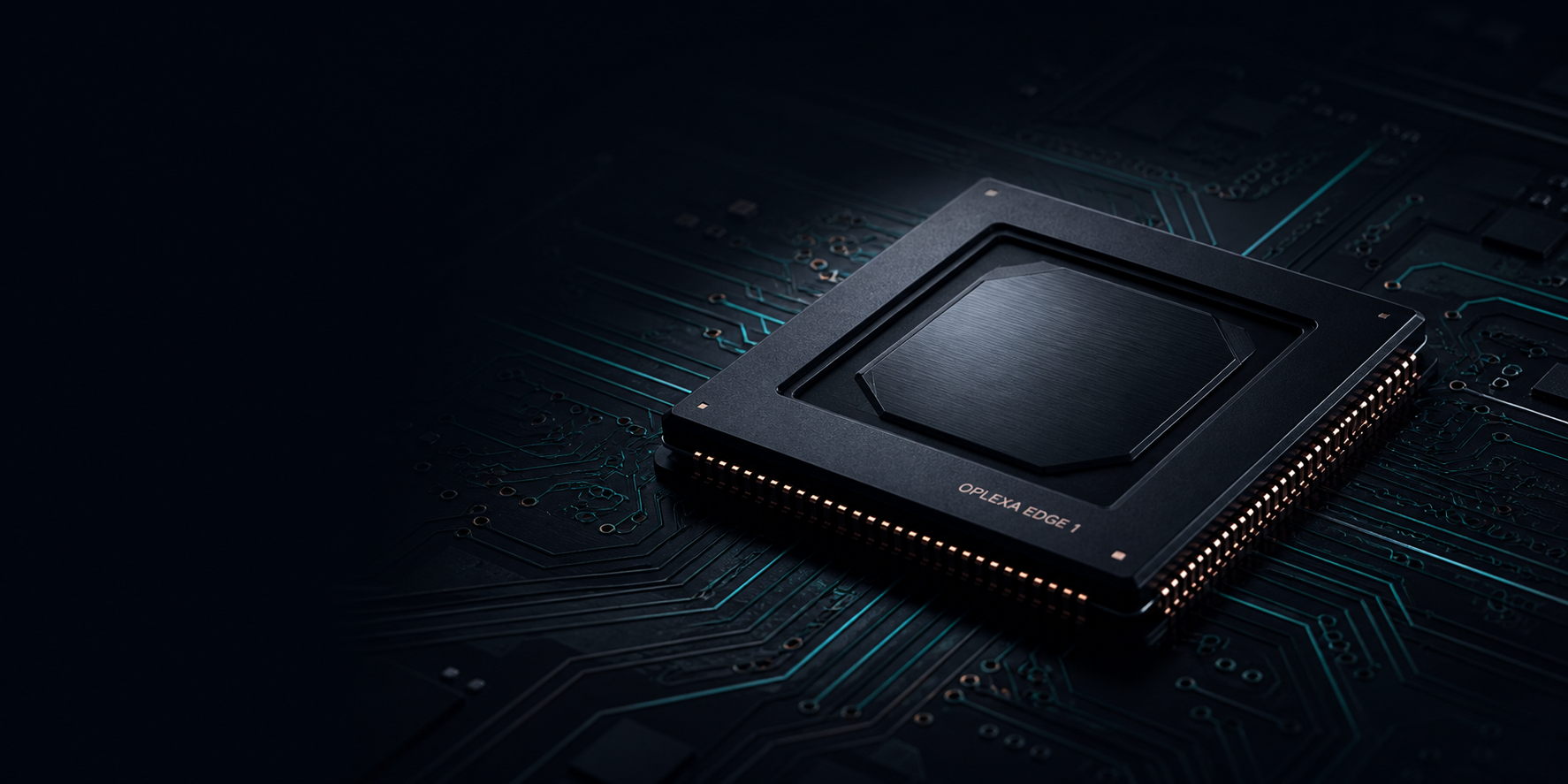
Oplexa Edge 1 inference processor on a circuit board
Edge 1 Transformer-native inference silicon
The Problem

For more than a decade, AI infrastructure has been built around training increasingly large models in hyperscale datacenters. The next phase of AI is different. As AI moves into factories, hospitals, telecommunications infrastructure, robotics, defense systems, and sovereign programs, the engineering priorities change — from maximum throughput to predictable latency, power efficiency, on-device privacy, and reliable operation with no dependency on a live cloud connection, and often no dependency on a foreign supply chain at all.

Market Opportunity
2026 $33.3B 2032 $81.1B

Edge AI hardware is one of the fastest-growing segments of AI infrastructure. Research and Markets' July 2026 forecast projects the segment growing from $33.3B in 2026 to $81.1B by 2032 — a 15.87% CAGR. Other firms tracking the category put 2026 estimates in the $26–37B range at 15–22% CAGR, depending on scope. Oplexa is built for the part of that curve general-purpose hardware wasn't designed for.

A New Category

Oplexa isn't building a smaller datacenter chip. We call our approach transformer-native computing — hardware and a software stack designed around the execution characteristics of modern transformer models, on an instruction set we control end to end, instead of adapting an architecture built for graphics or for training.

A transformer-native processor carries no rasterization pipeline, no shader hardware, no speculative general-purpose execution it doesn't need. It does one thing: execute transformer inference efficiently, deterministically, and within the power and supply-chain constraints real edge and sovereign environments actually have. Read our full thesis on why this matters →

"Edge AI doesn't need a smaller datacenter. It operates under a completely different set of engineering constraints." Mitthan · Founder & Managing Director, Oplexa
Where It Runs

Built for the places compute can't be rented

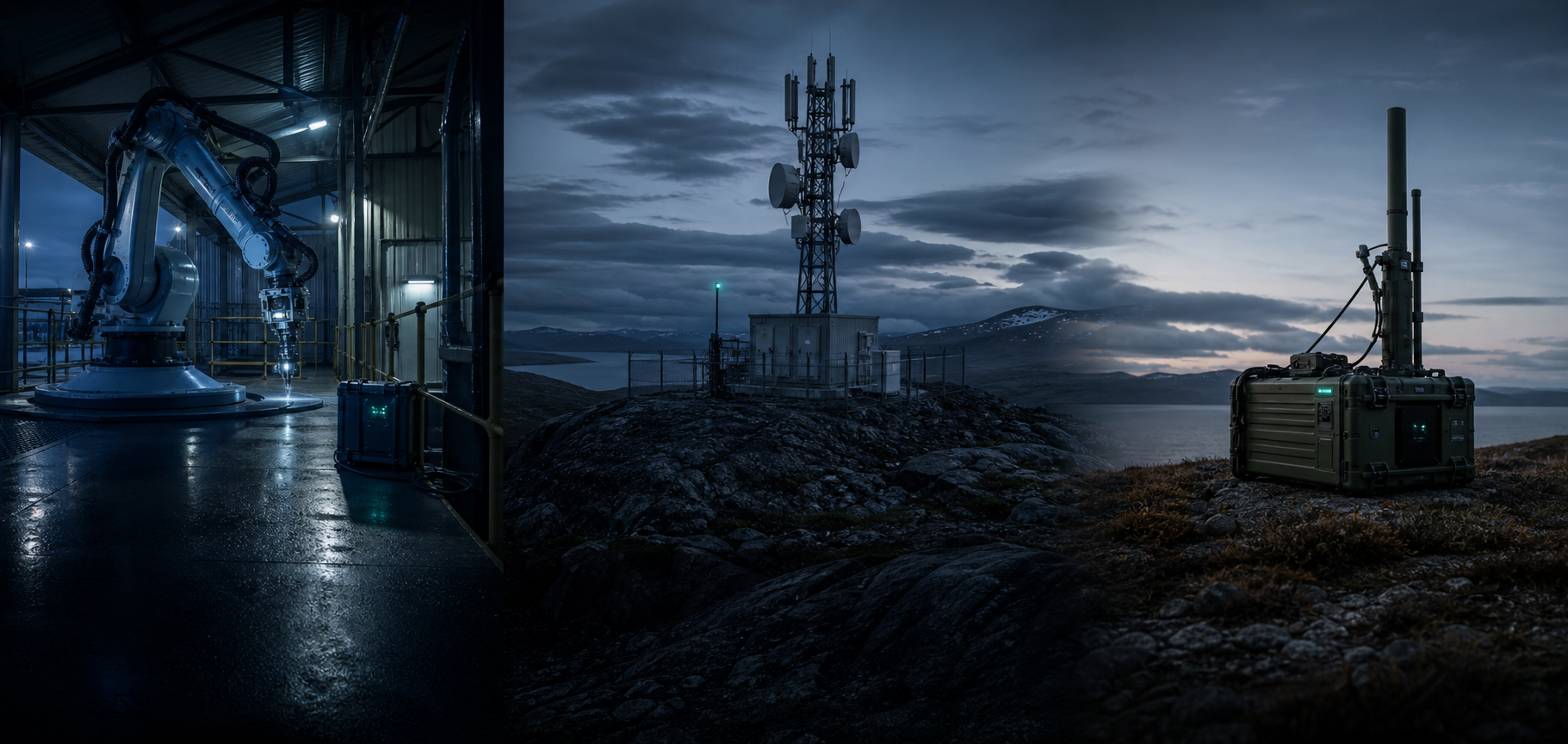
Edge AI deployed across industrial robotics, telecom infrastructure, and secure field systems
One architecture. Mission-critical inference across industrial, telecom, and sovereign systems.

Defense & Sovereign Programs

Air-gapped, export-control-clean inference for environments where routing data through a third-party cloud isn't an option.

Telecom Infrastructure

Deterministic, low-power inference at the base station and network edge, without adding a datacenter's worth of cooling and power draw.

Industrial & Robotics

Real-time perception and control loops that can't tolerate the latency jitter of a round-trip to the cloud.

See the full application set →

Building the inference layer that doesn't need permission from a hyperscaler

Oplexa is building for the part of the market that cannot depend on someone else's cloud. If you're evaluating silicon for a sovereign, defense, or edge AI program, start with the product architecture and current deployment fit.

Decision Tools
Available

HBM Fit Analyzer

Validate whether a model and workload fit within selected GPU HBM capacity and effective bandwidth planning limits.

Request Access

Available

Cloud Build vs Buy

Compare cloud GPU rental against on-premises infrastructure with deterministic calculations and exportable reports.

Request Access